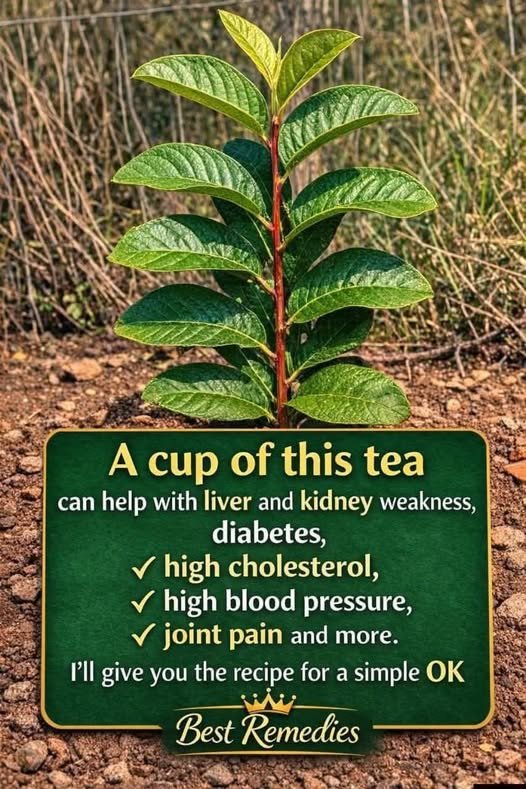
Guava leaves have been used traditionally in different parts of the world to prepare herbal tea. Online posts often claim that guava-leaf tea can support the liver and kidneys, lower blood sugar and cholesterol, reduce blood pressure, and relieve joint pain.
Some early research has investigated guava leaves and their plant compounds, but these claims should not be treated as proven medical treatments. Evidence in humans remains limited, and herbal tea should not replace prescribed medication. (NCCIH)
What Does Guava Leaf Tea Actually Contain?
Guava leaves (Psidium guajava) contain various plant compounds, including polyphenols and other antioxidants. Researchers have studied guava leaves for possible effects on glucose metabolism and other health markers.
However, promising laboratory or early studies do not automatically mean that drinking guava-leaf tea will treat a disease.
Can It Lower Blood Sugar?
This is one of the most common claims about guava leaves.
Some research has suggested that guava-leaf preparations may influence blood glucose, but the evidence is not strong enough to recommend guava tea as a treatment for diabetes.
The NCCIH notes that there is not enough reliable evidence to support herbal supplements as a treatment for diabetes and warns against replacing effective diabetes treatment with unproven products. (NCCIH)
If you have diabetes, continue monitoring your blood glucose and follow the treatment plan provided by your healthcare professional.
What About High Blood Pressure?
There isn’t enough evidence to say that guava-leaf tea can reliably treat hypertension.
For people with high blood pressure, proven approaches include a healthy diet, physical activity, maintaining a healthy weight, limiting alcohol, managing stress, and medication when necessary. NCCIH states that no dietary supplement has been shown to have effects comparable to blood-pressure medications. (NCCIH)
Can It Cleanse the Liver or Kidneys?
Claims that guava-leaf tea can “cleanse” or strengthen the liver and kidneys are not well established by clinical evidence.
Your liver and kidneys already perform important processes that help maintain the body’s internal balance. If you have kidney or liver disease, it is especially important to speak with a healthcare professional before regularly using herbal preparations.
A Simple Guava Leaf Tea
If you simply enjoy guava-leaf tea as a traditional beverage, a simple preparation can be made with clean, properly identified leaves.
Ingredients
- 4–5 fresh guava leaves
- 2 cups water
Instructions
- Wash the leaves thoroughly.
- Bring the water to a boil.
- Add the leaves.
- Simmer gently for about 5–10 minutes.
- Remove from the heat and allow the tea to cool slightly.
- Strain and serve.
This recipe is intended as a traditional herbal beverage, not a treatment for diabetes, hypertension, kidney disease, liver disease, or other medical conditions.
Important Safety Considerations
If you take medication for diabetes, blood pressure, cholesterol, or another chronic condition, talk with your doctor or pharmacist before regularly consuming herbal preparations.
This is particularly important for people taking diabetes medication because some plant products may potentially contribute to low blood sugar. More generally, herbal products can have side effects or interact with medications. (NCCIH)
Stop using the tea if you experience unusual symptoms such as significant stomach upset, dizziness, weakness, or an allergic reaction.
The Bottom Line 🌿
Guava leaves are an interesting traditional ingredient, and scientists continue to study their plant compounds. But claims that one cup of guava-leaf tea can treat diabetes, high blood pressure, high cholesterol, kidney problems, liver weakness, and joint pain are not supported by sufficient clinical evidence.
Enjoy it as a traditional tea if it suits you, but don’t use it as a replacement for medical care or prescribed medication. (NCCIH)