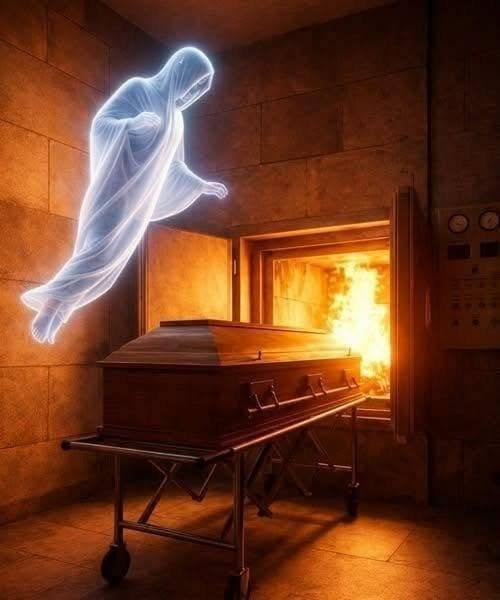
Cremation has become increasingly common around the world, but for many Christians, it raises an important spiritual question: Is cremation a sin? What does the Bible actually say about it?
For centuries, burial has been the traditional way of honoring the dead in Christian communities. From the Old Testament to the New Testament, we see many examples of God’s people being buried. Because of this, some believers wonder whether choosing cremation goes against biblical teaching.
The truth is, the Bible does not directly command or forbid cremation. However, it offers principles that many Christians consider when making this deeply personal decision.
Does the Bible Mention Cremation?
Yes — but not often.
There are a few references where bodies were burned, but usually under unusual circumstances.
One example is the story of King Saul after his death. His body was burned by the men of Jabesh Gilead before the bones were buried (1 Samuel 31:11–13).
In the Old Testament, burning was sometimes associated with judgment or severe punishment, but these cases were not the normal practice for God’s people.
Burial was the standard.
Burial in the Bible
Many important biblical figures were buried:
- Abraham
- Sarah
- Isaac
- Jacob
- Joseph
- Moses
- Most importantly, Jesus Christ Himself was buried after His crucifixion.
Because Christ was buried and resurrected, many Christians view burial as a symbol of the hope of resurrection.
Does Cremation Affect Resurrection?
This is one of the biggest concerns.
The Bible teaches that God is fully able to resurrect the body, no matter what happens to it.
Whether a body decomposes naturally, is lost at sea, destroyed in fire, or cremated, God’s power is not limited.
In 1 Corinthians 15, the apostle Paul the Apostle explains that the earthly body is perishable, but the resurrected body will be imperishable and glorified.
This means cremation does not prevent resurrection.
God created humanity from dust and can restore life from dust.
Is Cremation a Sin?
Based on Scripture, most Christian scholars agree:
Cremation itself is not explicitly called a sin in the Bible.
The greater issue is often the heart, intention, and beliefs behind the decision.
Questions some believers may ask include:
- Is the choice based on practical reasons?
- Is it made with dignity and respect?
- Does it reflect faith and honor for the body?
The Bible teaches that the human body is a temple of the Holy Spirit (1 Corinthians 6:19), so many Christians feel the body should be treated with reverence after death.
Why Some Christians Prefer Burial
Some choose burial because:
- It follows biblical tradition
- It symbolizes “sleep” before resurrection
- It reflects the burial of Christ
- It preserves historical Christian practice
Others choose cremation because:
- Lower cost
- Limited burial space
- Family preference
- Simplicity
Different Christian Views
Different Christian denominations hold different perspectives.
For example:
- The Roman Catholic Church permits cremation, as long as it does not deny belief in resurrection.
- Many Protestant churches also allow it.
- Some Orthodox Christian traditions still strongly prefer burial.
Final Thoughts
The Bible does not clearly condemn cremation, nor does it present it as the normal pattern for God’s people. Burial remains the strongest biblical tradition, but cremation is not generally considered a salvation issue.
For Christians facing this decision, prayer, personal conviction, family values, and church guidance can all play an important role.
At the end of the day, what matters most is not the method of caring for the body after death — but faith in God, the hope of resurrection, and the promise of eternal life through Jesus Christ.